Curated by
November 21, 2025
-
December 16, 2025
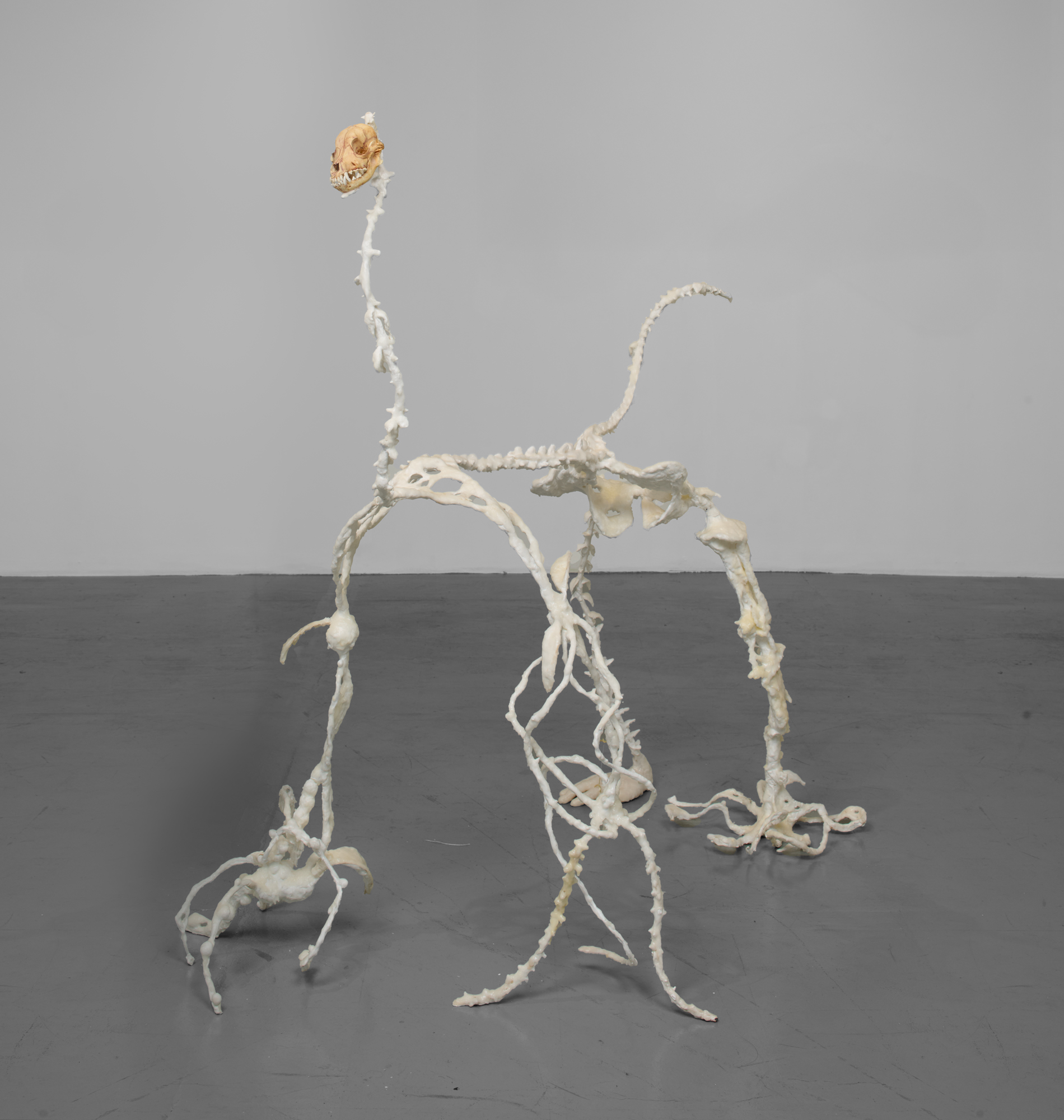
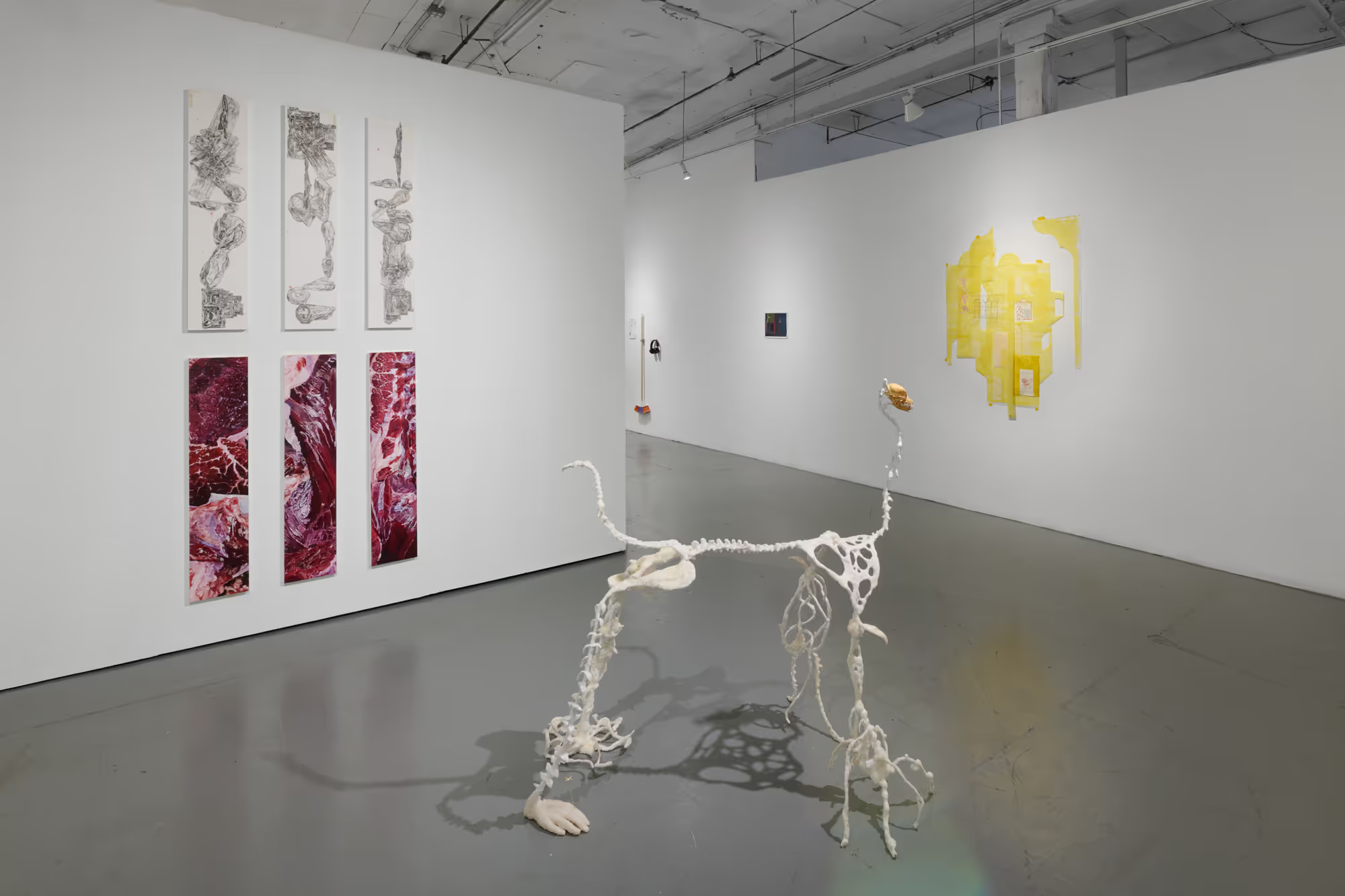
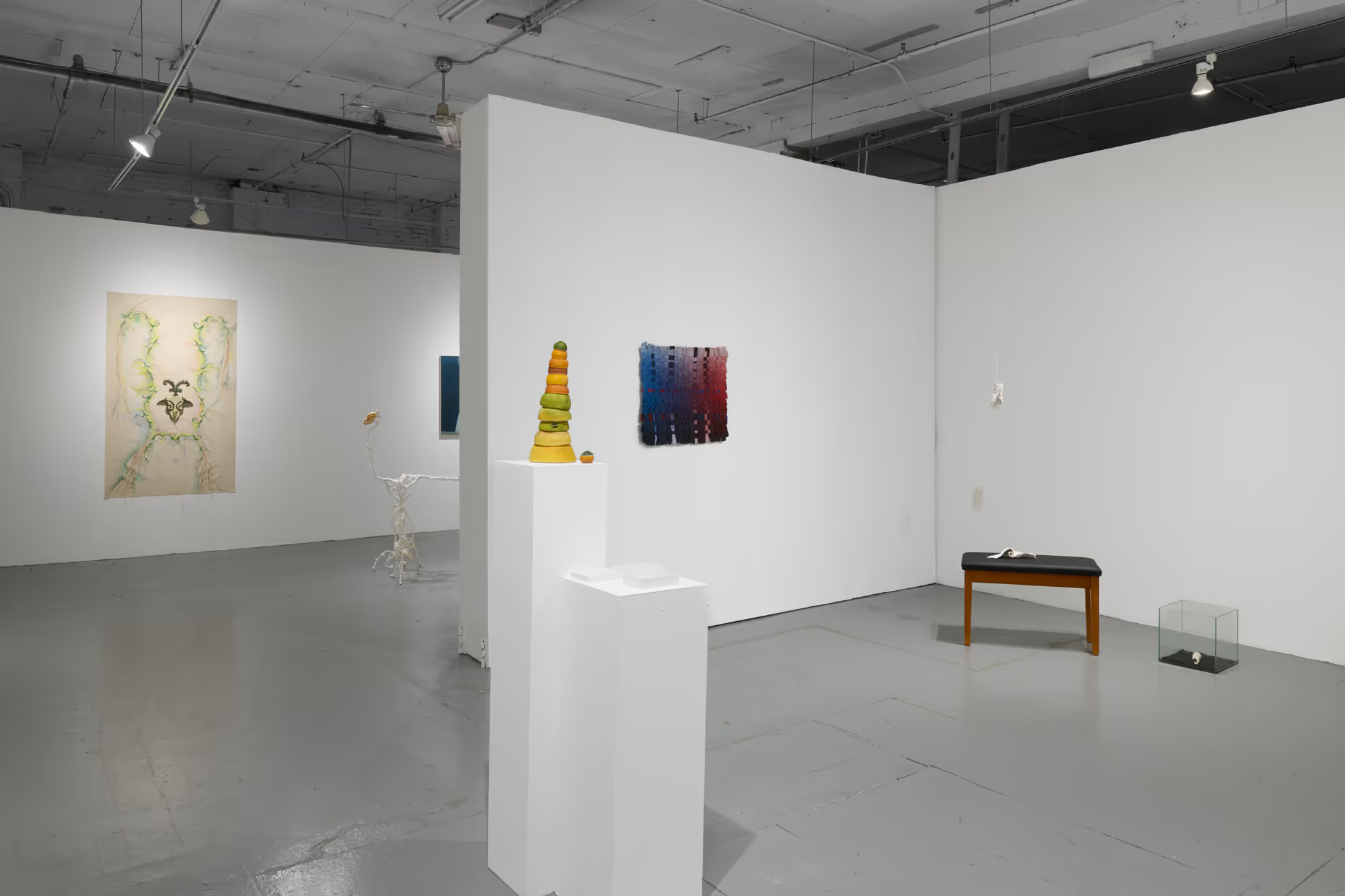
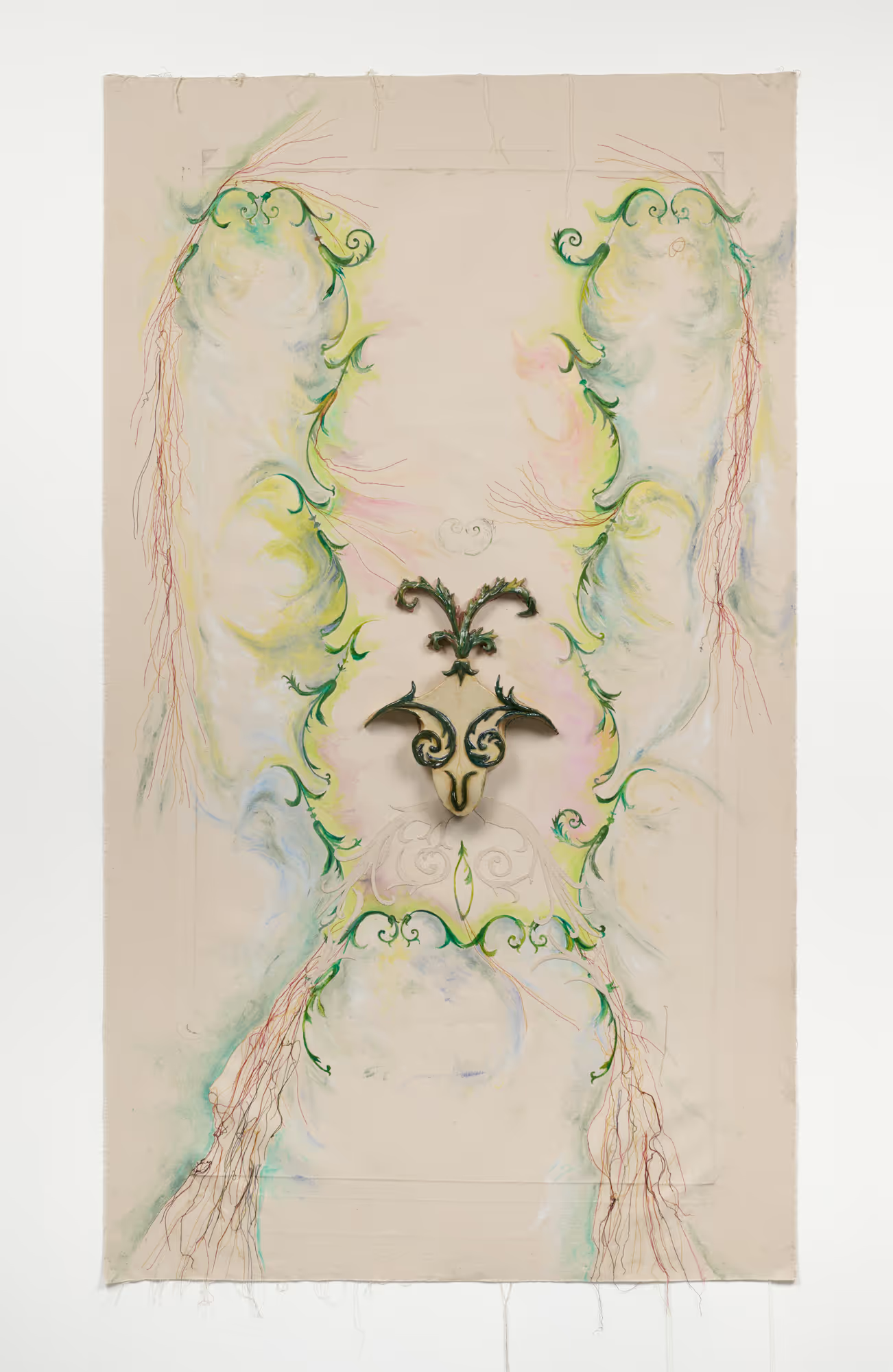
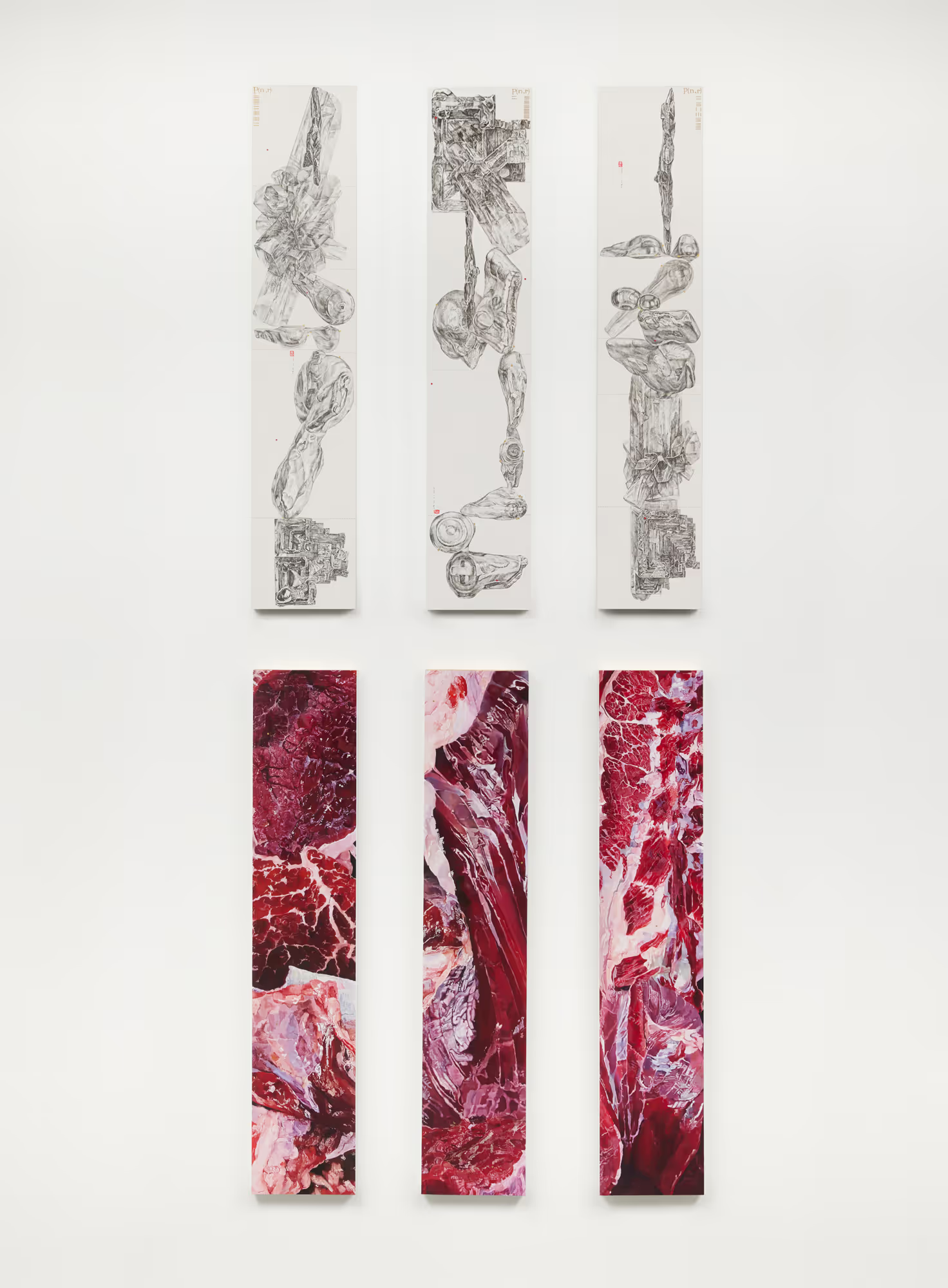
Image: Hyunjin Park, 'Three Bodies of Cerberus', 2024. Photographed by KC Crow Maddux.
When searching for terms like "hot links" or "leaked content," users often encounter risky websites . Here is how to stay safe: Avoid Unverified Third-Party Sites:
This was not just an aesthetic choice; it was a cultural statement. Elippathayam (The Rat Trap, 1981), directed by Adoor Gopalakrishnan, used the metaphor of a rat trap to describe a feudal landlord unable to adapt to a socialist, post-land-reform Kerala. The film won the Sutherland Trophy at the London Film Festival, but more importantly, it captured the existential angst of the upper-caste janmi (landlord) witnessing the rise of the communist worker.
Kerala is a land where politics is discussed over tea at every street corner, and cinema captures this rhythm. The "chayakada" (tea shop) is a recurring trope—a democratic space where feudal lords, communist laborers, priests, and students argue about Marx, God, and Mohanlal’s last movie. This integration of geography and social habit is what gives Malayalam cinema its organic texture.
Malayalam cinema is an integral part of Kerala's culture and has played a significant role in promoting the state's rich cultural heritage. With its diverse range of genres, talented actors and directors, and socially relevant themes, Malayalam cinema continues to thrive and entertain audiences both in India and abroad.
For a long time, Malayalam cinema was the "critic’s darling" but a commercial minnow. That changed in the post-OTT (Over-The-Top streaming) era. During the COVID-19 lockdown, the world discovered the ruthless efficiency of Malayalam thrillers and the warmth of its family dramas.
Malayalam cinema, often celebrated for its realism and narrative depth, serves as a powerful cultural artifact of Kerala’s unique socio-political landscape. This paper examines the dialectical relationship between Malayalam films and Kerala culture—how cinema reflects traditions, caste dynamics, gender roles, and political movements, and conversely, how it influences public consciousness and cultural evolution. Focusing on three distinct phases (the golden age of realism in the 1980s, the commercial turn in the 2000s, and the contemporary New Wave), the paper argues that Malayalam cinema is not a passive mirror but an active participant in reshaping Kerala’s identity.
The Mirror of a Society: Malayalam Cinema and Kerala Culture
The foundations of Malayalam cinema are deeply intertwined with Kerala’s literary tradition and social reform movements. The early decades of the industry saw a seamless transition of popular Malayalam literature from the page to the silver screen.
After a brief creative lull in the 2000s, a new generation of filmmakers sparked a cinematic renaissance often termed the "New Generation" wave. Filmmakers like Lijo Jose Pellissery, Dileesh Pothan, Mahesh Narayanan, and modern writers like Syam Pushkaran stripped away remaining commercial formulas.
Films like Vanaprastham (1999) center on Kathakali as a lived art, while Kumbalangi Nights (2019) uses the backdrop of backwater fishing communities to explore masculinity. Sadya (feast) scenes in Sandhesam (1991) become metaphors for family and community bonds.
Before cinema dominated the cultural landscape, traveling theater troupes (such as the Kerala People's Arts Club, or KPAC) used drama to spark conversations about class struggle and caste discrimination. Early cinema absorbed this performance style, prioritizing grounded acting, sharp dialogues, and socially relevant themes over larger-than-life spectacles. Reflecting Socio-Political Consciousness









.jpg)