Oligoscan is an innovative medical device
Physiological imbalance screening. Non-invasive, no blood test needed.
Learn moreOligoscan easy to use
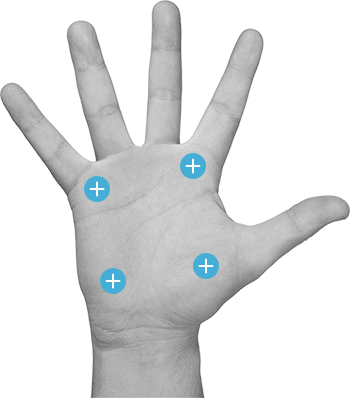
A quick evaluation of minerals and toxic metals in the palm of the hand.
Learn moreScreening of physiological imbalances helps better health control and trace minerals overall wellbeing.
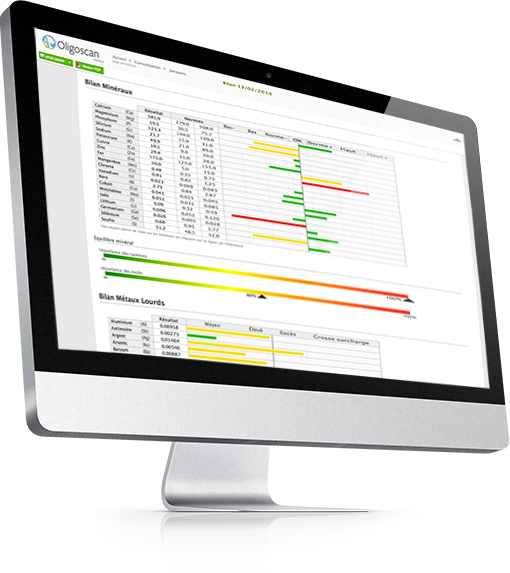
Excess and deficiency in minerals
A risk of toxic metals poisoning
Responsible for aging and numerous other diseases
Instant measurements of minerals, trace elements, oxidative stress and toxic metals.
Oligoscan can be used by all health specialists allowing for rapid and pain free analysis.
The measurement is taken directly by a portable spectrometer connected to a computer
The technology is based on spectroscopy
Evaluation of trace minerals reserves, the level of oxidative stress and toxic metals
Non-invasive measurement taken in situ
The record provided allows for detection of trace elements and minerals deficiencies as well as high rate of toxic metals in the body.
Oligoscan is now used by health professionals in many countries as a solution whenever a quick and accurate analysis of the level of trace elements, minerals and toxic metals is needed.
The Oligoscan uses optical technology : spectrophotometry.
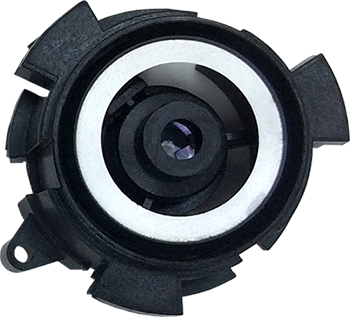
This is a quantitative analytical method of measuring the absorption or the optical density of a chemical.
It is based on the principle of absorption, transmission or reflection of light by the chemical compounds over a certain wavelength range.
Spectrophotometry is used in many areas : chemicals, pharmaceuticals, environment, food, biology, medical / clinical, industrial and others.
In the medical field, spectrophotometry is used to examine blood or tissue.
The Oligoscan is a reliable and scientifically proven tool..
A set of tests and comparative studies have been made by researchers highlighting a correlation between the results of the Oligoscan and those performed in the laboratory.
The update standardizes cross-platform font rendering. When using the font across creative suites, the system-level implementation ensures consistent tracking and spacing: Menu Display Name Implementation Method (InDesign, Photoshop, Illustrator) Filmotype Lucky Regular
For professional or academic reports, standard serif fonts like Garamond , Times New Roman , or sans-serifs like Helvetica are preferred for readability. Filmotype Lucky | Adobe Fonts
: Automatic fractionals, ordinals, and a suite of alternates that create a smooth, connecting look.
Lucky wasn't born into a digital world; it was a star of the library. The Filmotype machine, often called the "iMac of the 1950s," was a manual photo typesetting device that used 2-inch filmstrips to set headlines on photo paper. Lucky became one of its standout scripts, defined by its fluid strokes and authentic retro vibe. The Digital "Upd" (Update)
sat down to pen a script that would capture the approachable, breezy spirit of American lettering. Using a monoline style—where the line thickness remains consistent throughout—Baker created a typeface that was both elegant and exceptionally wide, making it perfect for filling tight vertical spaces on posters and signs. The Filmstrip Era
: The lowercase characters feature precise exit and entry points that link together seamlessly. 3. The Digital "UPD" (Remastered Update) Feature Set
font-family: filmotype-lucky, sans-serif; font-style: italicnormal; font-weight: 400;
No great design uses just one font. Here are the top 3 pairings for the Filmotype Lucky UPD.
Because of its specific horizontal orientation and uniform weight, Filmotype Lucky excels in several key layout scenarios: 1. Retro Branding and Signage
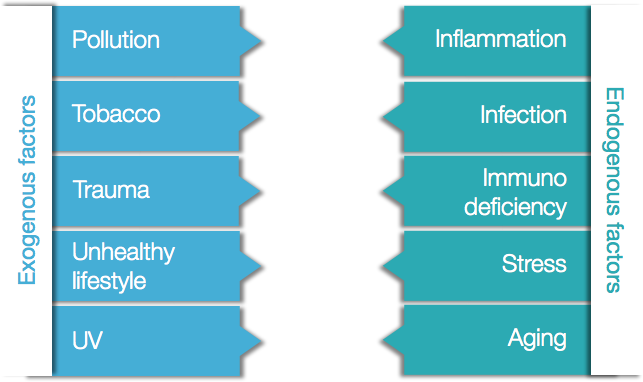
Free radicals are molecules produced in small amounts by the body. These free radicals are very reactive substances, capable of damaging the components of the cells (enzyme proteins, lipid membranes, DNA).
Their production is particularly stimulated by the exposure to sunlight (UV), tobacco, pollution, pesticides, etc.
A diet rich in antioxidants, particularly found in some fruits and vegetables, is essential in fighting free radicals.
Some scientific references :
The update standardizes cross-platform font rendering. When using the font across creative suites, the system-level implementation ensures consistent tracking and spacing: Menu Display Name Implementation Method (InDesign, Photoshop, Illustrator) Filmotype Lucky Regular
For professional or academic reports, standard serif fonts like Garamond , Times New Roman , or sans-serifs like Helvetica are preferred for readability. Filmotype Lucky | Adobe Fonts
: Automatic fractionals, ordinals, and a suite of alternates that create a smooth, connecting look.
Lucky wasn't born into a digital world; it was a star of the library. The Filmotype machine, often called the "iMac of the 1950s," was a manual photo typesetting device that used 2-inch filmstrips to set headlines on photo paper. Lucky became one of its standout scripts, defined by its fluid strokes and authentic retro vibe. The Digital "Upd" (Update)
sat down to pen a script that would capture the approachable, breezy spirit of American lettering. Using a monoline style—where the line thickness remains consistent throughout—Baker created a typeface that was both elegant and exceptionally wide, making it perfect for filling tight vertical spaces on posters and signs. The Filmstrip Era
: The lowercase characters feature precise exit and entry points that link together seamlessly. 3. The Digital "UPD" (Remastered Update) Feature Set
font-family: filmotype-lucky, sans-serif; font-style: italicnormal; font-weight: 400;
No great design uses just one font. Here are the top 3 pairings for the Filmotype Lucky UPD.
Because of its specific horizontal orientation and uniform weight, Filmotype Lucky excels in several key layout scenarios: 1. Retro Branding and Signage